An independent educational project
From three handwritten cells to a structured record
A bounded, AI-assisted reading of an approved excerpt from the St. Croix General Tabell of 31 December 1792, with provenance and limitations.
https://danishwestindies.org/source-to-data/
A permitted excerpt from existing transcription work: three cells, not a full dataset or a validated linkage.
1. Locate the historical source
Rigsarkivet: St. Croix General Tabell, 31 December 1792. Dronningens Quarteer, third estate row; viewer image 207. Identifiers: epid 20201795 · bsid 292226 · imageID 58788329.
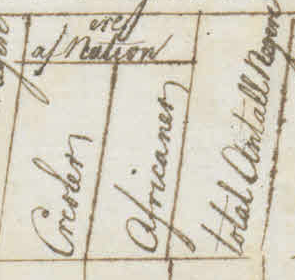
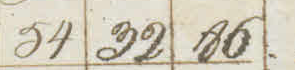
Source: Rigsarkivet. Two rectangular crops of the same scan; the numerals have not been altered. Permission for public reproduction confirmed by Anton on 24 October 2026; coauthor approval also confirmed. No general reuse licence is granted.
2. Preserve a bounded structured record
Unit: persons recorded as enslaved. The historical origin categories are retained as administrative labels, not validated personal identities.
| Field | Source label | Value |
|---|---|---|
| creoles | Creoler | 54 |
| africans | Africaner | 32 |
| total | Total | 86 |
Download the three values (CSV) · Download provenance and checks (JSON)
3. State exactly what was checked
- Existing reading log: model-assisted visual reading (
claude-opus-5, by eye), 2026-09-19. - AI-assisted visual comparison on 24 October 2026 of these three cells and the headings only.
- The row sum agrees: 54 + 32 = 86.
- The selected cells are not flagged or corrected in the inspected arithmetic-correction logs. This does not itself establish that a reading is correct.
What the checks do not establish
Misread numbers can still add up correctly. This example is not independent human ground truth, a full-sheet accuracy test, a genealogical link or a thesis finding. No linkage across years is demonstrated here.
4. Make the trail inspectable
The provenance file records the archival link, identifiers, image dimensions, crop coordinates and SHA-256 hashes of the scan and reading log used. These identify inputs; they do not make the reading infallible. The full scan and private reading log are not released here.
A separate methods note: number evidence is not name evidence →